Showing posts with label drop the needle. Show all posts

Ted Panken Plays "Drop The Needle" for jazztruth

Ted Panken(sitting with Dr. Billy Taylor and Dave Douglas)
If you are a jazz fan, you've probably read something by Ted Panken in the last few decades. Panken writes often for Downbeat, Jazziz, and also has written many liner notes. Originally from Manhattan, Panken broadcast on WKCR in New York from 1985 up until 2009. Panken is a writer I really respect because he knows and loves the music. I was fortunate to convince him to do a "drop the needle" for jazztruth. (BTW, "drop the needle" has nothing to do with heroin addicts running from the police. It refers to the "needle" of a "record player", something we used to listen to music years ago before all of this wonderful digital technology…) Panken basically nailed it, and made some insightful comments about the music, as was expected and desired. (Note-some of the tracks listed have youtube links, so you can listen along...)

1."Free Cell Block F Tis Nazi USA"; Charles Mingus, Changes Two (1975);Charles Mingus -bass, Jack Walrath -trumpet, George Adams- tenor saxophone, Don Pullen-piano, Dannie Richmond -drums

TP: Mingus. This is the opening track on either CHANGES 1 or CHANGES 2 from 1974 or '75. Great melody and arrangement. One of my favorite Mingus bands, and certainly the one I saw most often -- 10-11 times, both in New York and Chicago. Great sardonic line... It's the band that introduced me to Mingus, with George Adams, Jack Walrath, Don Pullen and Dannie Richmond, each a rugged individualist and team player -- they play the charts properly (well, all of them had played in bands for years before joining Mingus) and let the soulfulness come out when it was time to solo. One of his most competent as well as most inspired bands. Maybe the title is "Remember Rockefeller at Attica." George Adams was such a great interpreter of Mingus' music...such a soulful, cogent, individualist. I dig the way Don Pullen digs into his solo, starting inside the harmony and swinging, and then transitioning into his signature percussive, speaking-in-tongues-on-the-piano, quasi Cecil Taylorisms. I miss both of them. Dannie Richmond, too -- so insouciant and in control. I miss personal sounds and unorthodoxy and university of the streets finishing schools... No Wally Cleavers need apply! 5 stars.

2."Lullabye Of Birdland"; Sarah Vaughn and Clifford Brown (1954)

TP: Sarah Vaughan, "Lullaby of Birdland." I know this track, of course. It's so iconic, it's hard to talk about without resorting to what everyone knows -- her voice is like an instrument, and she can anything she wants with it; he swings like a gate, etc. Brief piano solo by Jimmy Jones, I think, then Roy Haynes starts a series of exchanges with Sarah -- flute (can't remember who it was...maybe Herbie Mann), then Paul Quinichette in his light, quasi-Prez style, then Clifford Brown. Sarah's responses are musical, and she seamlessly segues back into the lyric.Anyway, it's perfection. Nothing else to say. This was a working trio (Joe Benjamin is on bass, I think), and I believe they'd toured a lot in 1954, when the recording was done. My two favorite Sarah recordings are for Roulette, one with a big band led by Benny Carter, the other an intimate date with George Duvivier and a pianist whose name escapes me right now. Both are around 1960-1962, when she was in her late thirties, and her chops and taste coexist in equal measure.

3."Mt. Harrissa"; Duke Ellington, Far East Suite (1966)


TP: Ellington. The piano trio intro first made me think of Money Jungle, but it's definitely not Max on drums, and the bassist is keeping the groove -- no "kill the father" here!! Intoxicating, exotic theme. I feel I know the melody, but I can't identify it. Love Ellington's left hand...just an incredible statement, and tossed off with utmost savoir faire and casualness. Then the saxes-against-brass come in. What an amazing sound -- I never get tired of Ellington Orch. ensemble passages. Certainly sounds like the latter '60s or early '70s, when Ellington was working with a broader template of rhythms... Plus, I'm more inclined to identify the drummer as Rufus Jones than Sam Woodyard. Ok, here's the tenor solo (2:10). Tonality sounds a little darker than Paul Gonsalves, which makes me think it's Harold Ashby....but then on the other hand, the passages from 3:05 to 3:15 seem to me to be more characteristic of Gonsalves...so I'll go with Paul Gonsalves as the tenor soloist. He plays off the band so beautifully. Somehow, I'm thinking of a reharmonized-refracted "Satin Doll" meets "Girl of Ipanema"... I love Ellington's long closing trio restatement, the way he addresses the Spanish tinge. I don't recall anything on the Latin American Suite that sounds like this, nor on the New Orleans Suite... Maybe it's from the Far East Suite. Whatever the case, it's yet another Ellington masterpiece.
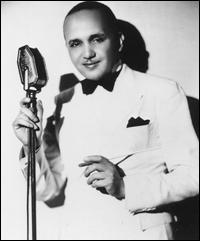
4."Copenhagen";Fletcher Henderson (with Louis Armstrong)(1924)

TP: I don't recognize it, but given the shifting themes in the beginning, and the programmatic feel, not to mention the sonic quality of the recording, I'm assuming it's one of Jelly Roll Morton's mid-'20s sides in Chicago by the Red Hot Peppers. Wait...that bad-ass trumpet or cornet solo is Pops...or not? I don't recall any Hot Fives or Hot Sevens with that level of onomatopoeia -- or, for that matter, ensemble sophistication. Is that a bass sax playing that little repeating motif? (1:46 & 1:58) Hmm... then it might be King Oliver's Creole Jazz Band, in which a bass saxophonist named Charlie Jackson played. That band had similar ensemble values. The banjo is swinging -- Johnny St. Cyr? However, I'm not hearing the two cornets too prominently in the ensemble. The Jelly Roll Morton and Creole Jazz Bands aren't stamped in my muscle memory, so to speak, so I'm in a quandary.

AFTER COMMENT: I'm going to lose my card in the Louis Armstrong society. Brainlocked on his year with Fletcher, which is funny, since I was just writing about how the circumstances under which he met Earl Hines in 1925, directly after returning to Chicago from his year with Fletcher in NYC...but so it goes. I'm going to have to bone up on my '20s FH.

5."Moose The Mooche  "; Mel Lewis and Friends (1977); Ron Carter-bass, Hank Jones-piano, Freddie Hubbard-trumpet, Michael Brecker-tenor saxophone

TP: Charlie Parker's "Moose the Mooche." At first blush I thought it was from the 1979 recording GROOVIN' HIGH (Muse) with Hank Jones, Thad Jones, Charlie Rouse, Sam Jones & Mickey Roker from the "Groovin' High" album, which I think I know well...but then I realized that they didn't do "Moose the Mooche" on that date (he recorded it in the late '70s with the Great Jazz Trio for Japan and also for Muse with George Duvivier and Ben Riley). But also, the time shift on the trumpet solo -- sort of quasi-funky -- would make me doubt myself immediately. Nor do I t think Thad would quote "St. Thomas" at the top of his second chorus. Nor would Thad Jones emphasize the rhythm changes over the melody -- he'd be reharming it at the very least. Nor do I think Thad would get into that high note stuff -- it's more reminiscent of Jon Faddis than Thad. The tenor saxophone solo is sturdy, some virtuosic stuff around 2:35-2:50 -- very notey, sounds almost Breckerish, but I have no idea who it is. The bass pick-up dates the recording to before 1985. Now, the pianist could be Hank -- nice left hand, very witty, clever quotes, nice flow, extremely slick and urbane. What he's playing around 5:15-5:20 convinces me that it actually is Hank. The trumpet blast around 5:30 tells me that it's Freddie Hubbard -- can't be anyone else. He reinforces that at 5:50. Not Freddie's greatest effort here -- lots of chops, not so much content; the opening solo was sloppy. Faddis would have played with a more Dizzy-ish bent. Unfortunately, I'm not nuts about the bass solo (the bassist sounds bored) or the concluding drum solo -- I like a little more snap-crackle in my bebop...that goes for the drummer's time behind the solos. The whole thing sounds kind of dated, except Hank, who was always fresh and on top of things.

  • AFTER COMMENT: In retrospect, I should have known it was Mel Lewis, who played here with the intention of orchestrating the flow on the fly as he would have done in the TJML Orchestra... After all, it was his record! But the chemistry wasn't quite right for it to work on this track.


6."A Time For Love";Bill Evans, Alone (1968)

TP: Solo piano. Makes me think of Bradley's third set, 2 in the morning. My first instinct is to say Bill Evans -- something about the touch and the voicings. I feel I should know the melody, but the title just won't come to mind...one of those hard-edged-yet-sentimental West Coast songs that I recoil from in the movie but get involved in when I hear a master improviser work with the harmony and remove the cheese. Actually, I think it's "A Time For Love". Johnny Mandel. In any event, I'm quite sure it's Bill Evans, and it's a tour de force. He spins such a poetic, logical web. Don't know what album it's from, though I'd guess 1967-70 as the period when he recorded it...this sort of song was topical then.

7."Teach Me Tonight"; Sammy Davis and Count Basie, Our Shining Hour (interesting note: recorded 1965, but Davis re-recorded his vocals in 1973 and then it was released)

TP: "Teach Me Tonight" by Sammy Cahn. Got to be the Atomic Era, New Testament Basie Band. With Sinatra...or is it Sinatra... Around 1:15 the timbre doesn't sound resonant enough to be Sinatra...and I think it's Sammy Davis signifying on Sinatra on OUR SHINING HOUR with the Quincy Jones charts. Is that Snooky Young taking the trumpet solo around 1:55? When the voice re-enters at 2:05, it's definitely Sammy being himself, and it's "Sammy Davis" til the end. But the Sinatra impression for the first minute was amazing -- pitch perfect. What's not to like about this track? I have to buy this record.

8."The Shadow Of Your Smile";Eddie Harris, The In Sound (1965); Cedar Walton-piano, Ron Carter-bass, Billy Higgins-drums

TP: "The Shadow of Your Smile" at a medium-bounce. At first I wasn't oriented as to whether the saxophonist was playing alto or tenor, but after a minute I realized that this is Eddie Harris' classic version from THE TENDER STORM, circa 1965, with Cedar Walton, Ron Carter and Billy Higgins, on perhaps the first time that this classic trio convened. I'm not crazy about the mix/remix -- I don't think Ron needs to be so high up in the mix, but that's just me. Deep swing. as a young guy in Chicago, Eddie Harris -- who came up playing piano in the church -- was a fan of Stan Getz -- and obviously Prez -- and took a lot of crap for this. He's one of the most subversive musicians ever. He knew how to connect with the public while not pandering or going overtly for house. At 2:36, check out how he gets a very trumpet-like sound out of the tenor...what control over the upper register! Lots of vocalized inflection as well. That squawk at 3:02! Or the way-up-in-the-altimissimo line at 4:02, that gradually winds down into mid register. Cedar's comping is super-hip -- check what he does around 3:32...just elegant, doesn't call attention to itself. An artist in complete control of his materials. And Billy Higgins is swing itself. What an original Eddie Harris was! After all, Muhal Richard Abrams was his pianist-of-choice through most of the '60s, and some of the stuff they recorded was way on the outer edge of things. 5 stars.

9."Never Will I Marry"; Nancy Wilson/Cannonball Adderley(1961);Nat Adderley-trumpet ,Joe Zawinul-piano, Sam Jones-bass, Louis Hayes-drums

TP: "Never Will I Marry." This is Nancy Wilson with Cannonball Adderley. Capitol Records, circa 1961 or 1962. Nice riffing behind her around 1:40 when she recapitulates the lyric. I dig the pungent timbre of her voice, the way she builds an emotional arc, conveying meaning in her initial rendering of the lyric through phrasing and deep swing, and then, after Cannonball's pithy solo, turning up the heat. Very tasty, to the point. Nice functional arrangement as well. I'm not as big a fan of hers as some, but she's such a pro, and such a distinctive voice. 4 stars.

 10."Carolina Shout "; James P. Johnson(1921)

TP: James P. Johnson's "Carolina Shout." Can't pinpoint the recording date, nor whether the performer is the composer or Fats Waller or Willie the Lion Smith. I think it's James P., though. There's a brisker, more percussive version of this by James P. that I favor, and I love Fats Waller's version, too, not to mention the video of Willie the Lion playing it with Osie Johnson on brushes. Club Barron in Harlem must have been quite a hang circa 1910. George Gershwin certainly thought so.

Bill Milkowski: Drop The Needle...( as in the needle for a turntable...)


Bill Milkowski
In one of the previous blogs, I did a short review of a book about bassist Jaco Pastorius, written by Bill Milkowski, one of my favorite jazz writers. Bill really knows his stuff and is highly respected in the field. I thought it would be cool to have him do a blindfold test(although I want to call it something else because Downbeat probably has that trademarked)for my blog. If you have no idea what I'm talking about, it's where I select music and the other person has to tell me who is playing without any prior knowledge, or hints about it("this drummer's name rhymes with Fax Coach.....duh!"). I came up with 10 tunes from the jazz and R&B world to see if they were recognized or not. Mr. Milkowski did not disappoint and I think this yielded great results. Thanks, Bill! Also, I have included youtube links where possible so you can listen along while you read. How's THAT for being thorough?YOU'RE WELCOME!


Frank Zappa
1. (“Peaches En Regalia”: Frank Zappa-Hot Rats- released in 1969)(Bill knows right away.)http://www.youtube.com/watch?v=BaKPqSNYknI
“Peaches En Regalia” from Frank Zappa’s Hot Rats – I had a cassette of this
album which I used to play at full blast volume in the cassette deck of my brown
Chevy van as I tooled down Lincoln Memorial Drive along Lake Michigan during
my Milwaukee youth. I was a huge Zappa fan, primarily for his extraordinary
guitar playing but also because of his subversive streak, which came out more
blatantly on Freakout! and We’re Only In It For The Money. Hot Rats was unique
in Zappa’s discography at the time it came out because it was not a Mothers of
Invention project, it was essentially a Zappa solo project done in conjunction with
multi-instrumentalist Ian Underwood and a few special guests soloists, like Jean
Luc Ponty on the jazzy “It Must Be A Camel.” Also, it was primarily an
instrumental album (Captain Beefheart was featured bellowing on the
nasty “Willie the Pimp” which featured some great, wailing violin work from
Sugarcane Harris and a brilliant extended wah-wah guitar solo from
FZ). “Peaches En Regalia” had a chamber-like exactness to it, as did “Son of Mr.
Green Genes.” There were some very interesting allusions to jazz on this record,
like on the soulful rubato number “It Must Be A Camel,” full of odd intervals from
Underwood’s overdubbed horns. Zappa would continue to explore this straddling
of jazz and rock on his next album with the Mothers of Invention, Weasles Ripped
My Flesh, particularly on avant garde pieces like “The Eric Dolphy Memorial
Barbecue,” “Prelude to the Afternoon of a Sexually Aroused Gas Mask” and the
title track. For me, Zappa is an under-recognized pioneer of fusion music and
these two brilliant albums – Hot Rats and Weasles Ripped My Flesh – are
landmarks in bridging those disparate worlds of rock and jazz.

2.(I Should Care:Abbey Lincoln and Hank Jones from When There Is Love-released 1994)(Bill knows again right away...) That is unmistakably the late, great Abbey Lincoln doing the Sammy Cahn
standard, “I Should Care.” Such a spell-binding, heart-wrenching quality in
that voice of her. Dig that little break in her voice toward the end when she
goes, “Oh!” Goosebumps. This is more intimate and revealing than the Betty
Carter version of this tune, which I also love. It’s a sparse piano-voice duet with
Hank Jones from a great early ‘90s Verve album, When There Is Love. Hank had
played on Abbey’s previous Verve recording, You Gotta Pay the Band, which
also featured Stan Getz and Charlie Haden. I have great memories of seeing
Abbey perform at Fat Tuesdays during the ‘80s. I actually did a Blindfold Test
with her in the late ‘80s at her place. I remember playing her an Aretha Franklin tune,
one of her early John Hammond-produced tracks, “Blue Holiday.” Abbey
was sitting on her couch, listening and as the song progressed she started
talking back to Aretha, “Sing it, girl!” and “Wooooooo!” At one point she got so
animated, she started laughing out loud at how baaaaad Aretha was that she
nearly fell off the couch. Abbey was an incredibly soulful, beautiful spirit, genius
lyricist and commanding presence on stage. Last time I saw her in concert was
when she opened for Ornette Coleman at Carnegie Hall as part of the 2004 JVC
Jazz Festival. It was a riveting performance that ripped the heart out of everyone
in the audience. And then I was totally knocked out by her last Verve recording,
2007’s Abbey Sings Abbey, which featured some radical reinventions of her
tunes by arrangers Gil Goldstein and Larry Campbell. She’s one of the all-time
greats.

3.(Outa Space: Billy Preston released in 1972) http://www.youtube.com/watch?v=75-gcaA850g&feature=fvw
You gotta be kidding me! I was JUST THINKING ABOUT THIS SONG
YESTERDAY!! It has deep connections for me on a number of levels. Billy
Preston’s “Outa Space,” which was an instrumental pop hit in 1972. This tune
was all over the radio during the summer of ’72 and one of my high school pals,
Bruce Guckleberg (who is now an evangelist preacher in Upstate New York),
actually adopted this as his personal theme song and developed an elaborate
choreography for it that involved perfectly-timed forearm smashes that were in
synch with Billy’s funky clavinet accents (a kind of homage to his boyhood hero,
Green Bay Packers middle linebacker Ray Nitchske). Guck, as we called him,
was a big animal of a football player himself and he used to literally ‘lose it’
whenever this song came on the radio, like a trance would come over him. He’d
go into this kind of robot dance and then forearm anyone or anything in his
vicinity when those downbeats came. I was on the receiving end of many of those
forearm smashes back in those days. My other memory of this tune was seeing
Billy Preston in concert with the Rolling Stones that same year, 1972, at
Milwaukee County Stadium (former home of my beloved Milwaukee Braves, who
moved to Atlanta in 1965 and then home of the brand new Milwaukee Brewers
franchise). The Stones gave Billy a featured spot in the show in which he came
out front with a portable clavinet strung around his shoulder like a guitar and he
played “Outta Space.” And Mick Jagger worked out some intricate choreography
with Billy, but unlike my pal Guck it didn’t involved well-timed forearm smashes
but instead involved Jagger coming up behind Preston, grabbing him tightly
around the waist and executing some deep thrusting hip-grinding into Billy’s
backside. Whether it was violent forearm smashes or simulated ass-fucking, this
catchy clavinet-fueled funk number never failed to trigger movement. Hell, I’m
dancing right now! This tune may have been one of the first to prominently
feature the clavinet. Stevie Wonder followed later that year with “Higher Ground”
and of course Herbie Hancock layered on some funky clavinet in 1973
on “Chameleon.” Some of the baddest clavinet ever is on an obscure track “A
Little Love’ll Help” from an obscure 1978 Paul Jackson Jr. album, Black Octopus,
which he recorded in Japan. Yes, that’s Herbie on clavinet. He’s the
baddest…STILL!

4. (Household of Saud:Charles Tolliver, from Paper Man, recorded in 1968, released in 1975. Charles Tolliver, trumpet; Gary Bartz, alto;Herbie Hancock, piano;Ron Carter, bass;Joe Chambers, drums)Sounds like John Hicks on piano. Not sure who is playing the very tight
trumpet-alto sax unisons on the head. Sounds kind of like Woody Shaw, but not
as wild and commanding in the chops department. This sounds like an older
recording…not a particularly great mix. The piano seems way too prominent
in the mix (even when comping) and the trumpet solo, though killing, is buried
somewhat. The drummer doesn’t sound particularly hip in terms of cutting up
the beat in unpredictable and creative ways (a la Roy Haynes). Sounds like
more of an old school time-keeper with that incessant ride cymbal work. Maybe
Jimmy Cobb. It’s definitely not Louis Hayes, who is more interactive on an upbeat
swinging tempo like this. Can’t hardly hear the bass player. Man, that piano is
brittle-sounding. Hey, that’s a Herbie riff on that solo. This is very energetic stuff,
Charles Tolliver
like something from the India Navigation or Strata-East labels from late ‘70s.(Editor's Note:Charles Tolliver was part of Strata East...GC)
It’s not Don Pullen. Is it Stanley Cowell? It’s a brisk neo-bop kind of tune with a
challenging arrangement, but I don’t know who the trumpeter is. He lacks the
chops of Freddie or Faddis or Woody Shaw, but he’s a stellar player. Sounds
like something that David Weiss’ band The Cookers (with Eddie Henderson, Billy
Harper, Craig Handy, Cecil McBee, George Cables) would play. But it’s definitely
an older recording. I’m stumped.

Marcus Miller
5. ( Nikki's Groove; Marcus Miller from M2, released in 2001.)http://www.youtube.com/watch?v=OgcNKZTBhW4
That’s unmistakably Marcus Miller. No one slaps with the kind of incredible
facility that he does. I mean, I heard him do a slap version of Jaco’s chops-
busting anthem “Teen Town.” Slapping through that whole head. And those
hammer-ons trills are signature Marcus. I don’t know the name of this tune but
it’s no doubt from one of his recent solo albums. His arrangements are always
so cool because he’s got a lot of Stevie Wonder in him and he layers all kinds
of slick little ear cookies on listeners, whether it’s a well-placed clavinet or bass
clarinet. This is so Stevie influenced. Very virtuosic yet very catchy. I’m not a
particular fan of that alto tone…kind of piercing. But this is a perfectly-crafted
pop instrumental that could be a giant radio play hit, like Billy Preston’s “Outa-
Space” was in 1972, if the whole system wasn’t so fucked up beyond belief. This
would’ve been all over the radio back in the ‘70s.

Chaka Khan
6. (Spring Can Really Hang You Up The Most: Chaka Khan, vocal. From Echoes Of An Era; Chick Corea, piano)http://www.youtube.com/watch?v=AmJUA2PGsK8
 Right away, from the kind of staccato attack on the keyboard, it’s gotta be
Chick Corea. Vocals? And not Gayle Moran? Soul singer. Chick’s flowery
accompaniment behind her reminds me of Leprachaun. Oh, it’s that record he
did with Chaka Khan that Lenny White produced. With Freddie Hubbard and
Stanley Clarke – Echoes of an Era on Bruce Lundvall’s label at the time (Elektra-
Musician). It’s “Spring Can Really Hang You Up The Most,” performed as a duet
with Chick. I’m not a great fan of Chaka. Her screech tones hurt. And there’s too
much affectation in her phrasing here, like she’s trying to ‘do’ Sarah Vaughan
on the low notes. Oy! And the belting! My ears are bleeding already! And
please, someone please turn down the reverb. Jeez! This sounds like a tortured
performance. I would’ve must preferred to hear this done with Abbey Lincoln.


7. (The Windup; Keith Jarrett, Belonging; released in 1974; Jarrett, piano; Jan Gabarek, saxophones; Palle Danielsson, bass: Jon Chistiansen, drums.)Jarrett in his gospel-Americana Impulse phase. No, this is with his European
group with Jan Garbarek. It’s a catchy, familiar theme from one of those ECM
albums from the early ‘70s. Can’t remember the name. The drummer, Jon
Christiansen, sounds great here, like a lighter version of Jack DeJohnette.
Very interactive and swinging and really reacting to everything Keith does,
especially in this free section. They got a nice dialogue going on here while the
bass player is pedaling along in the background. Garbarek’s sax sounds like a
kazoo to me. Wimpy-ass tone, though some of his ideas here – floating in half
time over the churning rhythm section, a la Ornette – are cool. I’m really digging
this drummer. I haven’t listened to these recordings in literally decades. Might
be time to reinvestigate this stuff…or at least get updated to what Christiansen
has been doing. He’s another one of those brilliant European jazz artists that
Americans (like me) seem to overlook. Ah, and they’re back to that catchy theme.
Jarrett is great at creating those great, catchy heads, like on Treasure Island and
Expectations and Fort Yawuh. He’s really brilliant. If only he weren’t such a prick.

8. (Paraphernalia:Miles Davis, from Paraphernalia;Live in Paris 1969; Davis, trumpet;Wayne Shorter, tenor saxophone; Chick Corea, Fender Rhodes; Dave Holland, Bass; Jack Dejohnette, Drums.) This is “Paraphernalia” from Miles in the Sky. But it’s not as hip as the album
version that I loved and committed to memory like a Beatles or Stones tune.
Must be from a concert. The Teo Macero-produced version starts out with a
crack from Tony Williams’ snare drum, followed by driving octaves from George
Benson on guitar while Tony heads into a Papa Jo Jones mode on the hi hat. It
has immediate impact and shape and a direction. This version I’m listening to is
meandering, not as focused or punchy as the original studio version. Not sure
what this is. Seems like it starts in the middle of an expansive jam where Herbie
is noodling around on a Fender Rhodes. Spacey and cool, but not as hip as the
punchy original with Benson on guitar. This has gotta be live. Miles’ playing is so
adrenalized here, and that’s definitely not Tony on drums. So it’s gotta be Jack
DeJohnette. Jack is amazing but his approach to the kit is rawer or more Elvin
influenced than Tony, who was so crisp and precise and quick-wristed…some
aspects of Buddy Rich in his playing, just in terms of peerless technique.
Jack is a wildman on the kit. He plays LOUD and forces those around him to
elevate their playing just to hang with him. I recently saw him bring out the more
aggressive aspects in John Scofield’s and Joe Lovano’s playing when they did
an all-star benefit gig together at The Falcon in Marlboro, New York. He’s a force
of nature, like Elvin. The soprano solo sounds like Wayne really opening up. And
that Rhodes player doesn’t sound like Herbie…too spiky and experimental. It’s
probably Keith Jarrett. Is this from the Antibes Festival, 1969? It’s cool and full
of raggedy, risk-taking energy but I much prefer the hipper, tighter studio version
with Herbie, Benson, Tony, Ron and Wayne.

9. ( Black Nile; from Thunder And Rainbows; released in 1995. Kenny Kirkland, piano; Charles Fambrough, bass. Jeff Watts, drums.)http://www.youtube.com/watch?v=cn6UQHD4GAs
Great piano player. The drum solo sounds like Jeff “Tain” Watts with that amazing metric modulation thing he does and that incredible rolling, off-kilter
Charles Fambrough, who was the leader of this record date!
polyrhythmic thing he does that sounds like his kit is falling down a staircase. So
this could be Kenny Kirkland. Or maybe George Cables. Both are very fiery yet
full of finesse…creative, expansive players. Or maybe even Geri Allen. Clever
use of that quote from “Softly As In a Morning Sunrise” throughout this piece. Not
sure who the bass player is.

10. (Vulcan Worlds; Return To Forever, from Where Have I Known You Before; released in 1974; Chick Corea, keyboards; Al Di Meola, guitars;Stanley Clarke, bass; Lenny White, drums.)
http://www.youtube.com/watch?v=8WPv5P-G4tQ
Again, triggering deep-seated memories from my impressionable years in
Milwaukee. This is “Vulcan Worlds” from Return To Forever’s Where Have I
Known You Before. It came out in 1974 just as I had turned 20 and it hit me
on a number of levels. The sheer power of the record blew me away and the
funkiness of the rhythm tandem of Stanley Clarke and Lenny White connected
it to a Sly Stone aesthetic, but it also had one foot in the jazz camp. This was
exciting new music to me at the time. I was coming from a Hendrix-Zappa-James
Brown-Sly Stone place, so these virtuosic jazz-rock bands played right into my
wheelhouse. And I ate it all up. Just as Ira Gitler had embraced the music of
Charlie Parker and Dizzy Gillespie when he was 20, I embraced RTF and the
Mahavishnu Orchestra and Weather Report when I was 20. And I felt especially
connected to RTF in particular because the hotshot young guitarist in the band,
Al Di Meola, was my same age (two months older). For most Return To Forever
fans, Romantic Warrior was their Sgt. Pepper’s. But I preferred Where Have I
Known You Before for its rawer edge and its exhilarating go-for-it energy. Plus,
it was the album that initiated me into the RTF cult. (By the way, I preferred
Revolver to Sgt. Pepper’s for the same reasons).

George, most of this music was right in my wheelhouse. All stuff I grew up with
and was imprinted on my teenage brain for all times.

Blog Archive